
Building a connected system for research knowledge
Companies already had the answers, they just couldn’t access them. Genius Hub was designed to connect fragmented research data into a system where teams can ask, explore, and reuse insights instantly.
In 30 seconds
Problem
Years of research sat scattered across dashboards, interviews and reports, so teams redid work instead of reusing it.
What I did
Designed a conversational hub that answers from selected sources, with traceable evidence and insights that can be saved and reused.
Result
80% of tested users preferred it to dashboards, with a potential average 70% cut in time-to-insight.
Overview
Genius Hub is an AI-powered Consumer Insights platform designed to help companies turn fragmented research knowledge into active intelligence. Instead of treating studies as isolated reports, the product connects quantitative data, qualitative researches, business context, and files from different formats into one experience where teams can ask questions, explore patterns, and reuse what the company already knows.
Problem
Historical data complexity
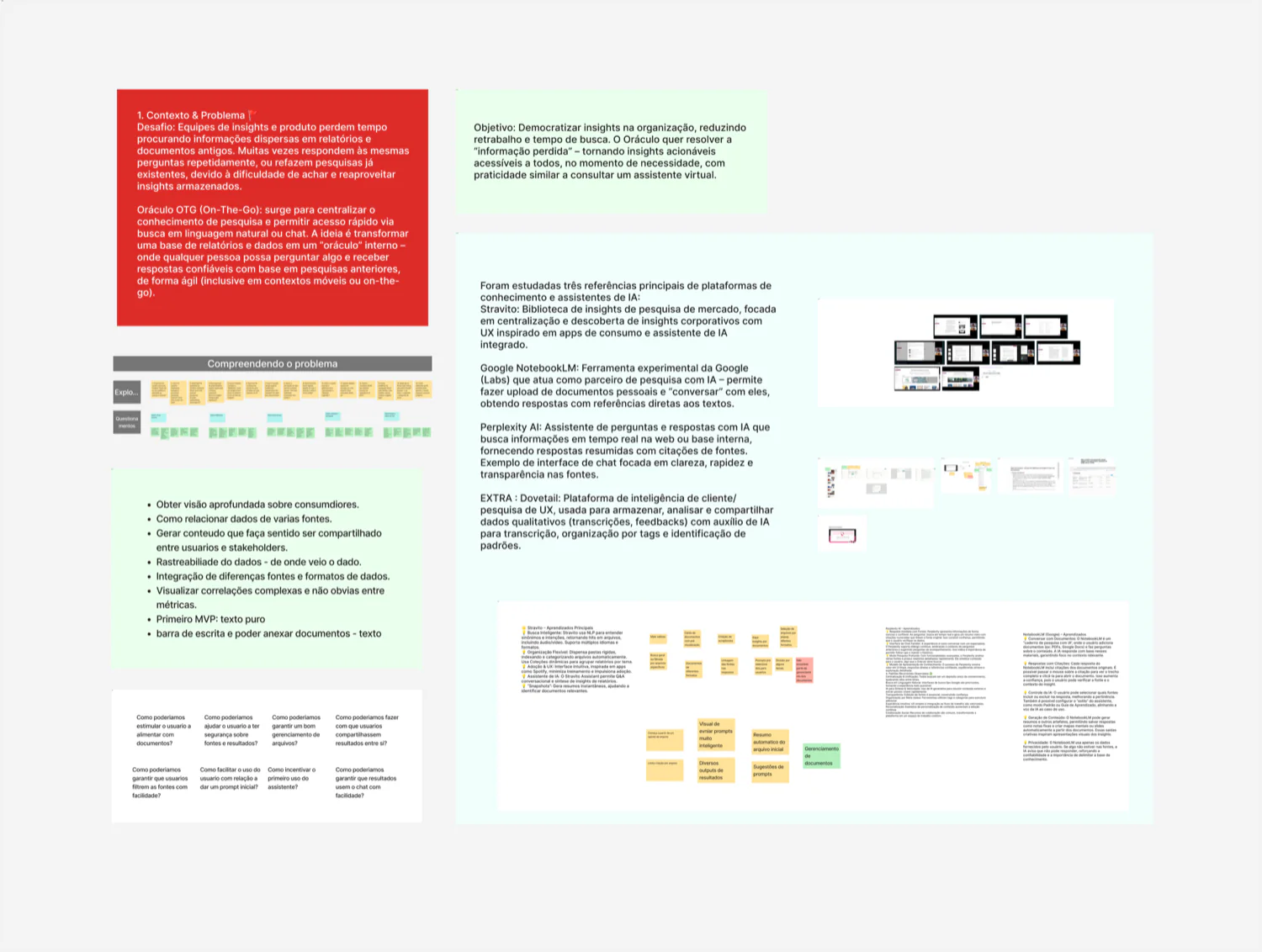
Companies had years of research, but no way to connect it. Insights were scattered across quanti dashboards, quali interviews, business context, reports, and files, making it easier to redo work than reuse it. Which brought us to a few statements:
CMI teams waste time searching for scattered information in old reports and documents. They often answer the same questions repeatedly, or redo existing research, due to the difficulty of finding and reusing insights.
Challenge
Make AI feel useful without hiding the evidence
The main challenge was not only creating a chat interface. In market research, answers need context, traceability, and trust. A stakeholder may ask a simple question, but the answer can depend on methodology, sample, country, audience profile, interview quotes, or quantitative cuts.
Organize complexity
Design a structure that could support qualitative studies, quantitative data, external files, and client-owned research without making the interface feel like a file manager.
Build confidence
Help users understand where AI answers came from, what sources were used, and when they should go deeper into the original research material.
Process
From research complexity to product structure
As the only Product Designer, I led the process from discovery and benchmarking to information architecture, high-fidelity prototypes and dev handoff.
The process focused on three key decisions: understanding how research knowledge gets lost over time, designing AI interactions with visible source control, and structuring the product around three connected areas: Sources of Knowledge, Chat and Conversation History.
Solution
A conversational hub for accumulated research knowledge
The final experience brings together knowledge organization, source exploration, AI-assisted synthesis, and saved insights into one workflow that can reason across quanti, quali, context, and files.
Solution 1
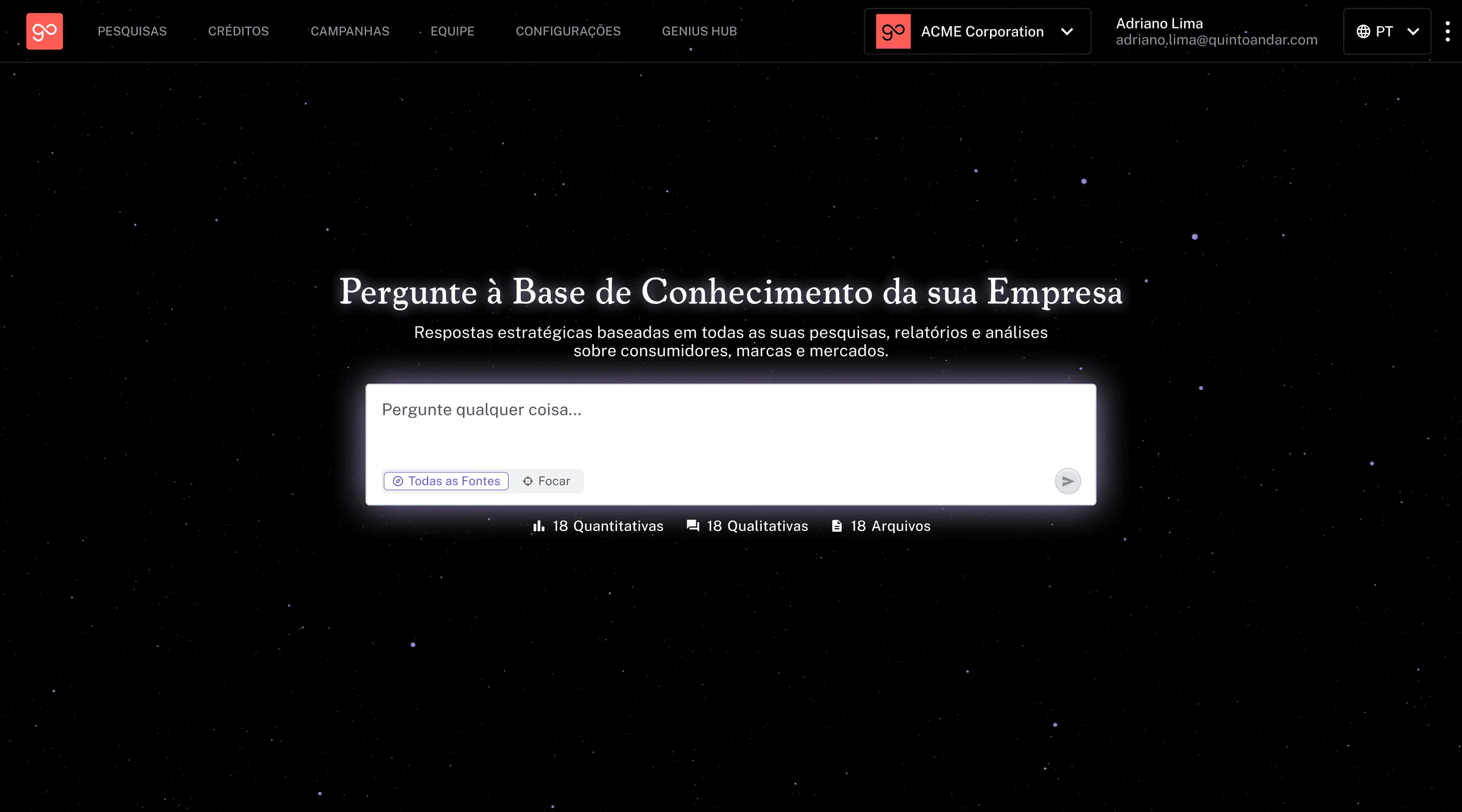
A new entry point for company knowledge
The first interaction needed to make the product value immediately clear. Instead of asking users to browse through multiple reports or dashboards, Genius Hub invites them to start with a question.
This entry point was designed to communicate that users could ask strategic questions across the company’s research base, including quantitative studies, qualitative material and uploaded files. It helped position the product as a direct path from business questions to research-backed answers.
Solution 2
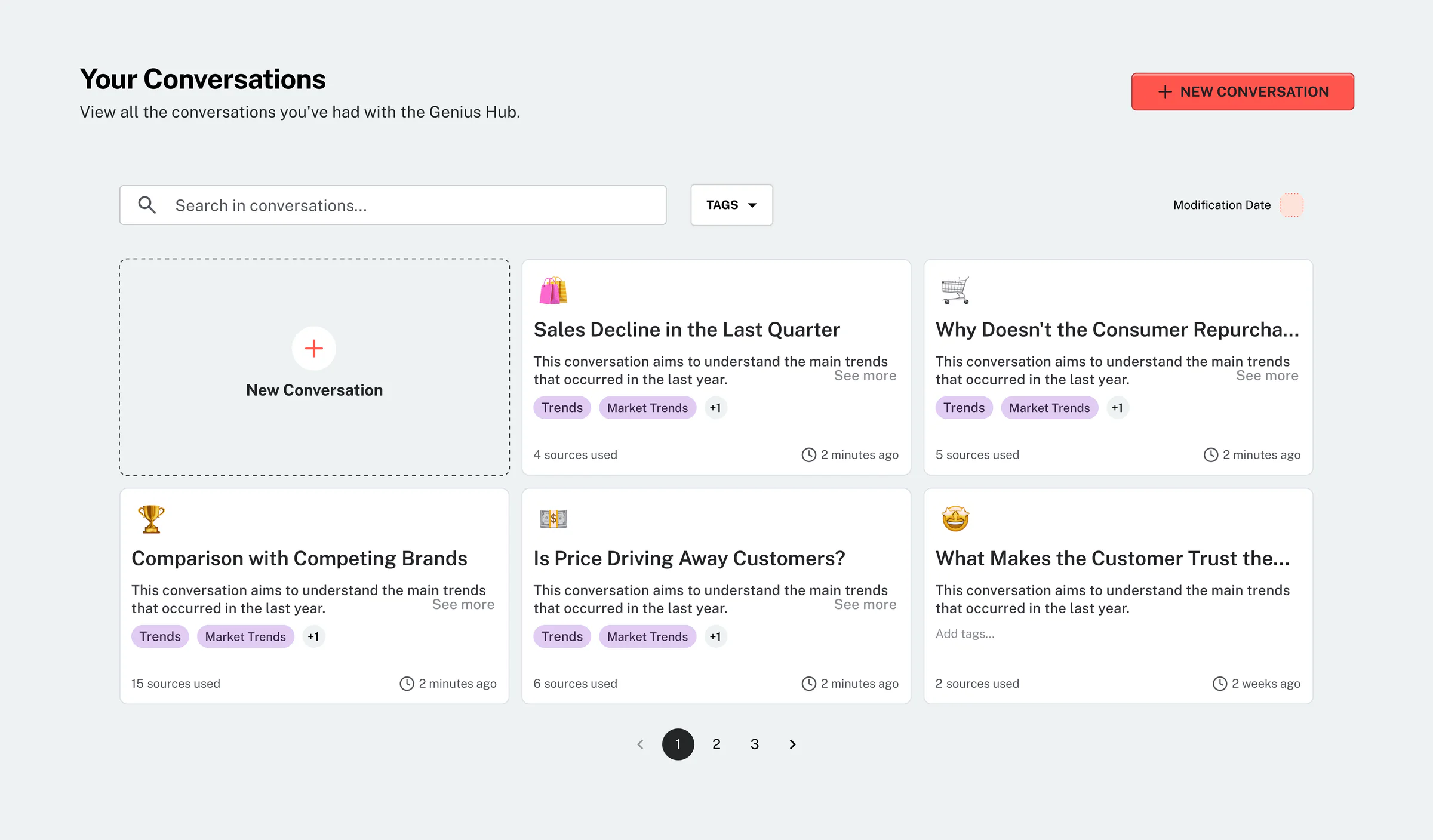
Conversations that preserve analytical context
Research exploration is rarely finished in one prompt. Users compare findings, refine questions, revisit previous answers, and continue analysis over time.
The conversation history helps preserve this analytical context. Instead of treating each interaction as temporary, Genius Hub allows users to return to previous explorations, understand which sources were used, and continue from where they stopped.
Solution 3
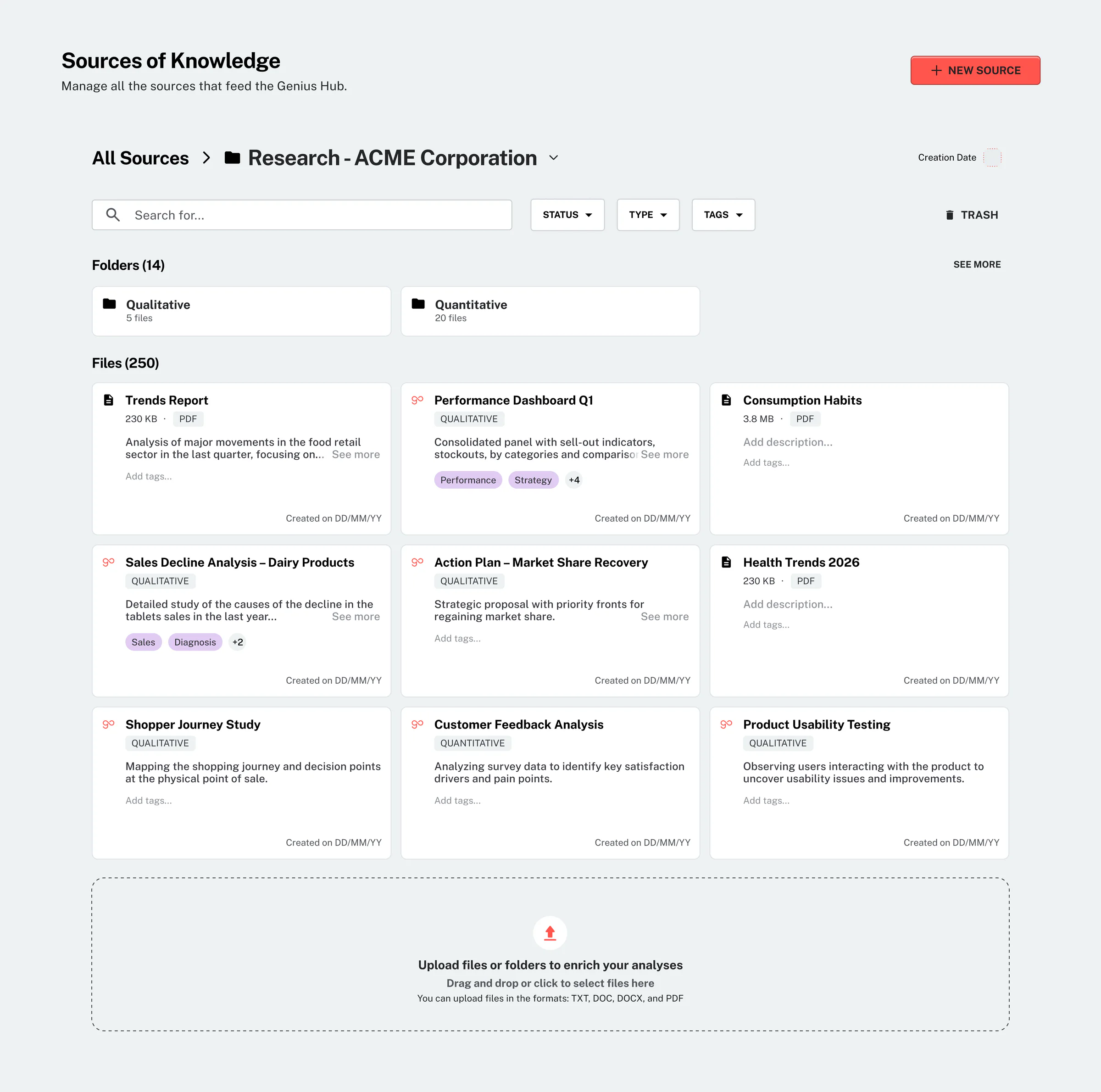
Organizing the company’s research memory
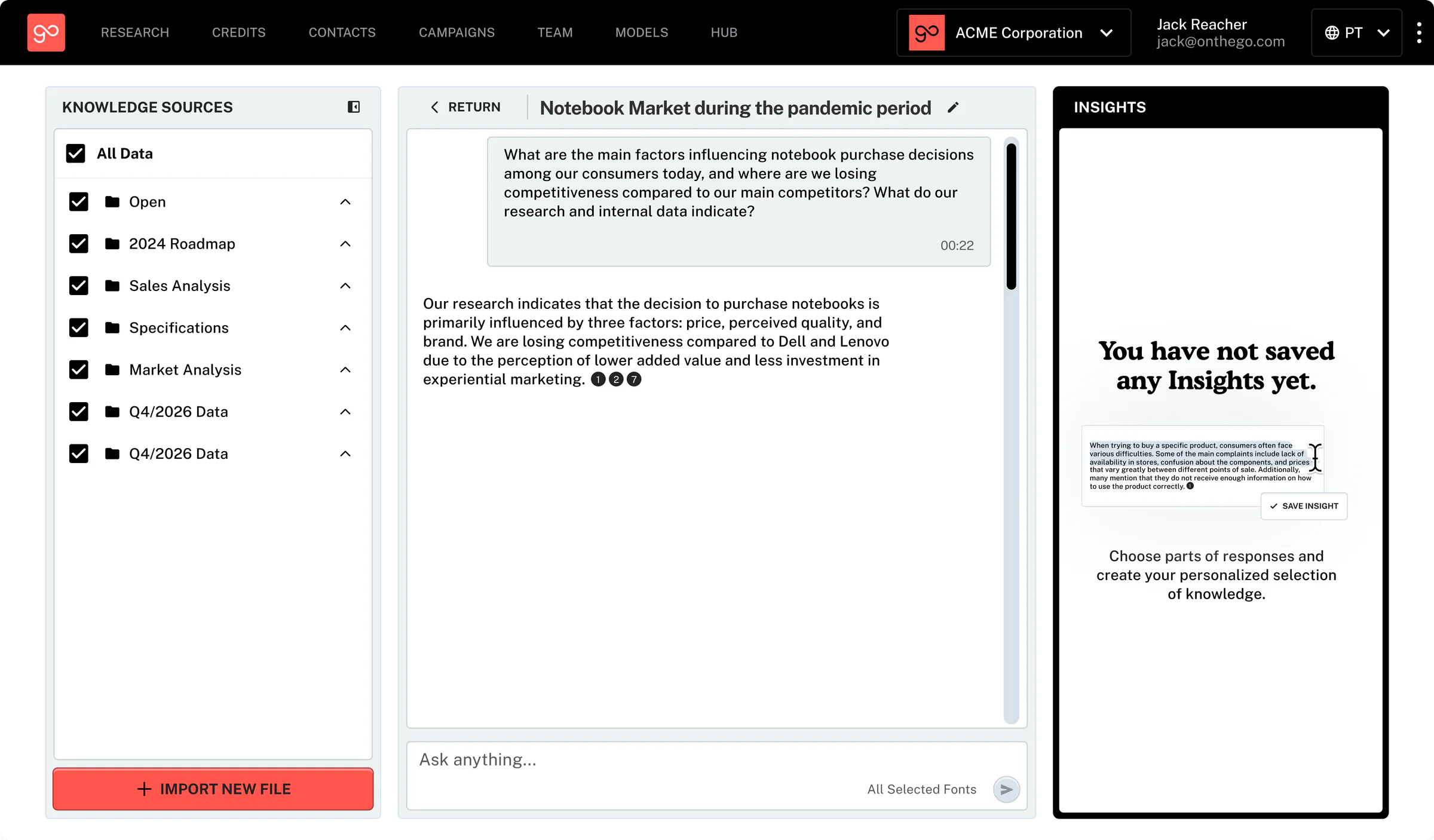
The quality of the AI experience depends on the quality of the knowledge it can access. Before users can trust an answer, they need to understand what information is feeding it.
The Sources of Knowledge area gives teams a structured way to manage studies, reports, dashboards, and external files. Folders, tags, filters, and source types help transform scattered research assets into an organized intelligence base.
Solution 4
A chat interface grounded in selected sources
A generic AI chat can answer broadly, but research teams need answers grounded in specific evidence. The interface needed to support exploration without hiding the context behind each response.
By connecting the chat to selected studies and files, users can ask follow-up questions, compare findings, and explore patterns while keeping the answer tied to the company’s own research base.
Solution 5
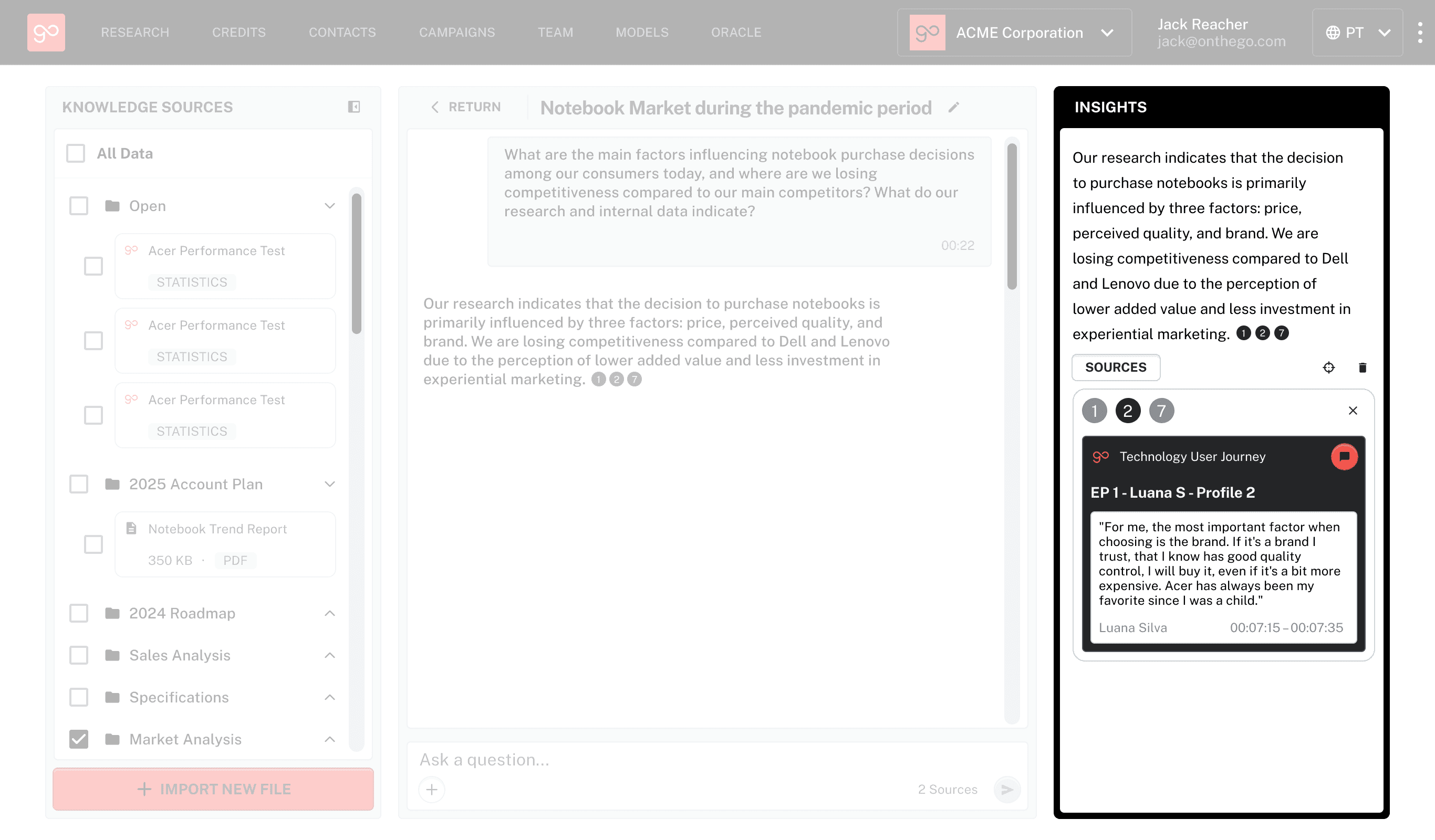
Source control as a trust mechanism
In research, the source behind an answer matters as much as the answer itself. The same question can lead to different conclusions depending on the market, audience, methodology, or time period considered.
Making source selection visible gives users control over the AI context. This helps build trust, reduces ambiguity, and makes the answer easier to evaluate.
Solution 6
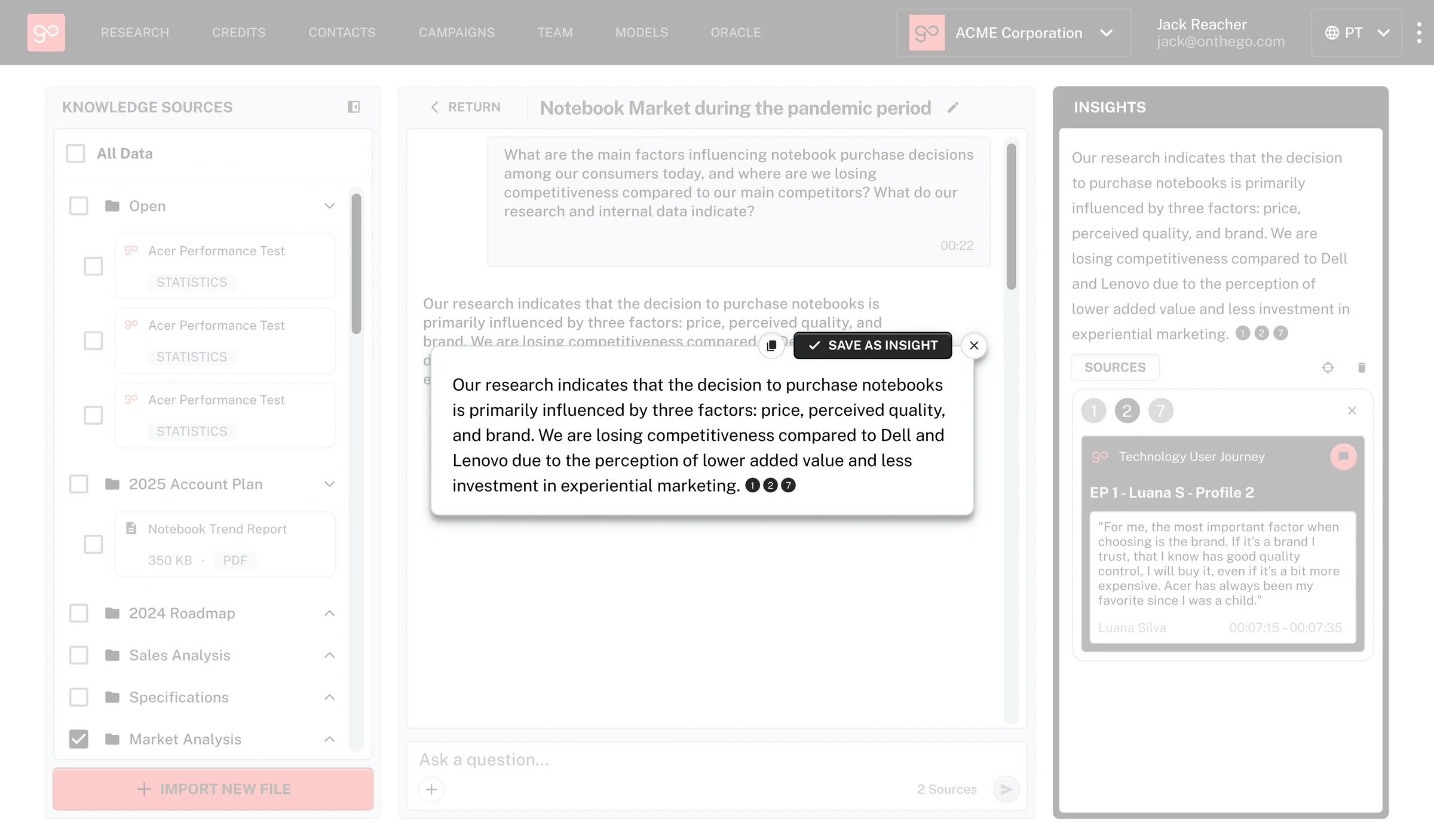
Turning AI answers into reusable insights
Valuable AI responses can easily disappear inside long conversations. For a research platform, that would limit the product to temporary answers instead of long-term knowledge creation.
The saved insights panel allows users to capture relevant parts of a response and reuse them later. This turns the chat into a knowledge-building workflow, not only a place to ask isolated questions.
Results
Early signals turned into measurable outcomes
Genius Hub was designed to make research easier to access, faster to explore and more useful across teams. Post-launch results reinforced some of the core hypotheses that guided the product direction.
80%
preferred conversational search
80% of tested users preferred exploring insights conversationally rather than navigating traditional dashboards.
Average 70%
potential reduction in time-to-insight
Conversational workflows showed the potential to reduce the time needed to answer common research questions by around 70%.
3
multinational company clients on MVP stage
3 huge clients purchased and validated demand during the product’s initial stage, which could establish it as a central company product.
Impact
Company flagship product, now live
Genius Hub was built with the intention of becoming On The Go's main product and the company has been showcasing it, including this demo of the platform in use.
Other cases
All cases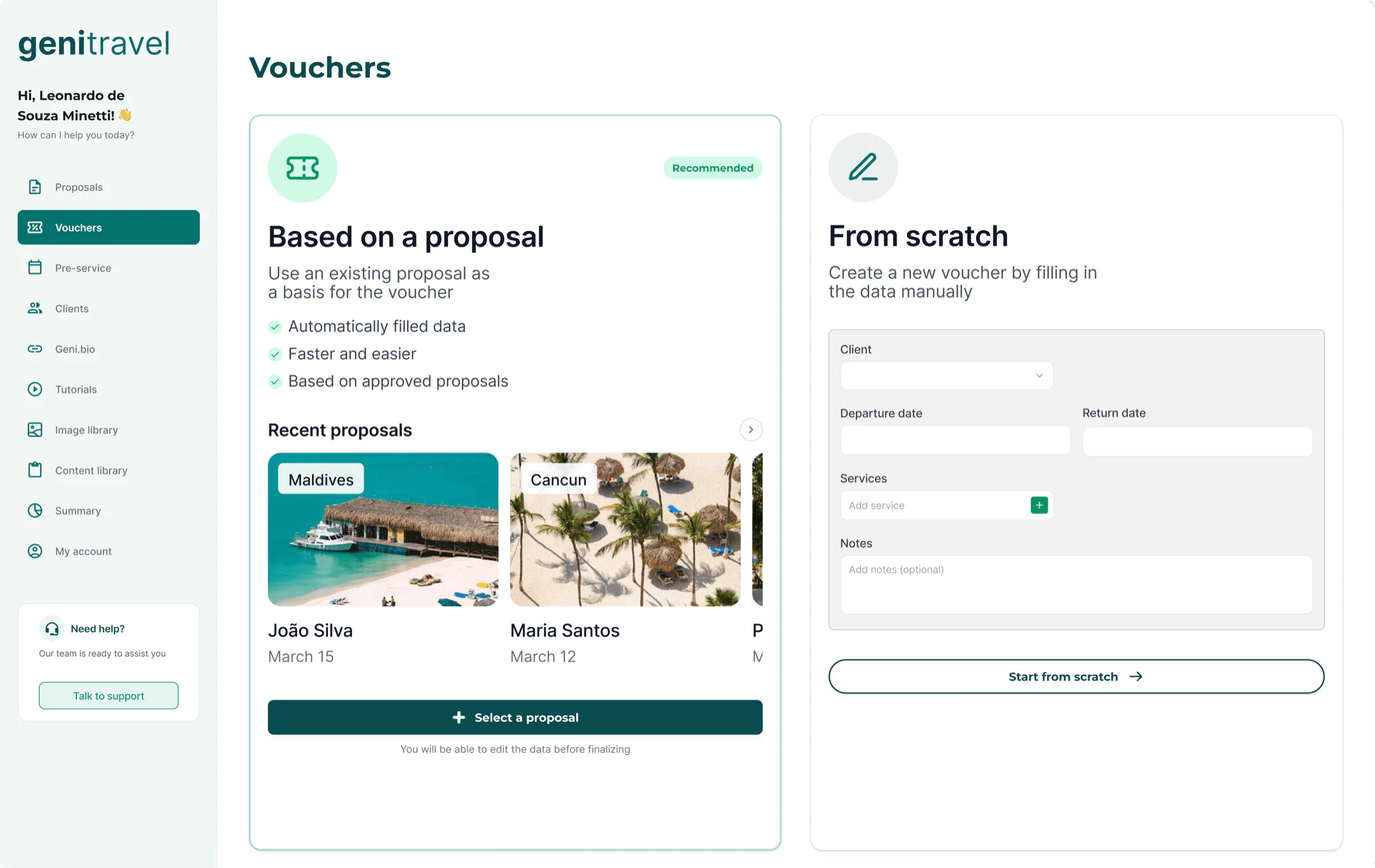
Turning proposal workarounds into a voucher workflow
A dedicated voucher workflow that helps travel agents create, track and deliver trip information with clarity.
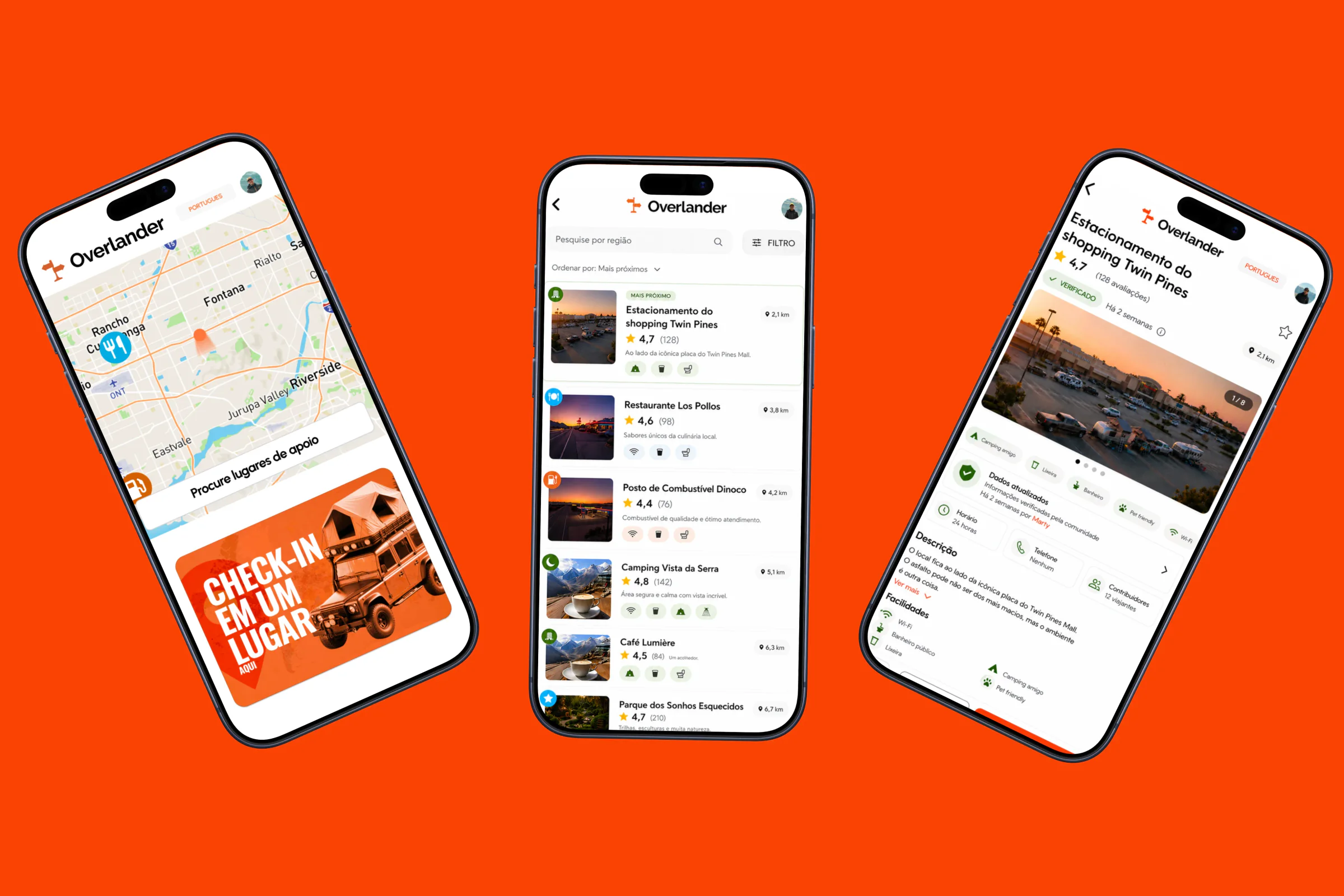
From data to decisions: rethinking exploration in iOverlander
Rethinking the exploration experience so travelers move from scattered data to fast, confident decisions on the road.