
What if you could just ask your audience a question?
From static research deliverables to AI-powered personas that think, respond, and explain, grounded in real survey and qualitative data across three Latin American markets.
In 30 seconds
Problem
Audience personas were rich in research but static: once delivered, teams filed them away and went back to gut feel.
What I did
Turned them into conversational personas, in a single-page interface where stakeholders ask questions and get answers grounded in real research data.
Result
Passive audience documents became an interactive research layer: 3 Latin American markets compared in one interface, with a quick summary and a live conversation on one screen.
Overview
The Personas Initiative is a research project that transformed static audience segments into interactive, conversational personas. Instead of presenting segments as flat slides or PDFs, the system allowed stakeholders to explore each persona directly, asking questions and receiving answers grounded in quantitative data, qualitative interviews, and behavioral patterns.
Problem
Personas were useful, but too static
Research teams at On The Go were producing detailed audience segments for clients, rich with quantitative patterns and qualitative depth. But once delivered, those personas stopped working. Teams read them once, filed them away, and kept making decisions based on gut feel. The problem wasn’t the quality of the research. It was the format.
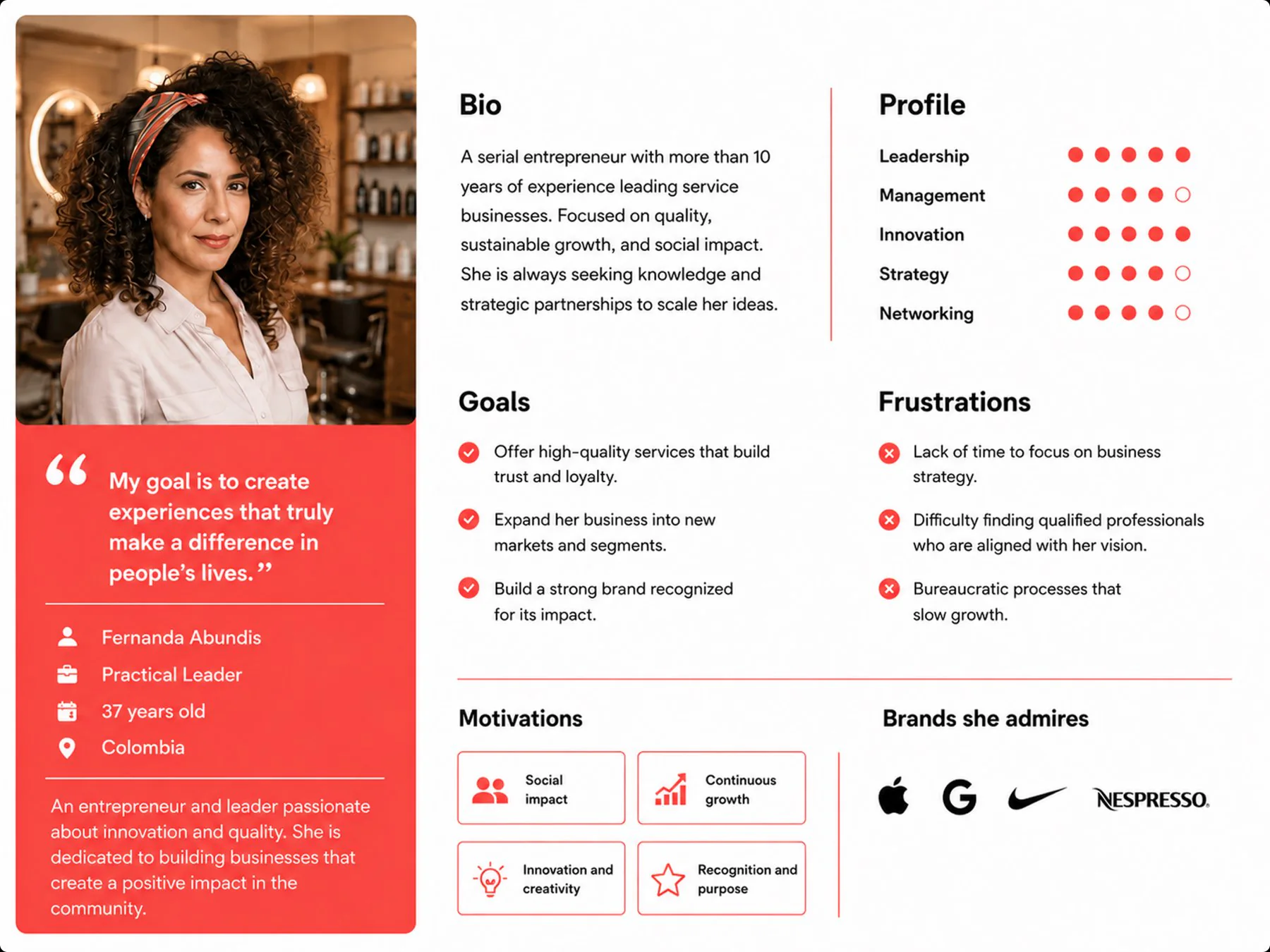
Stakeholders stopped using personas once they left the research room. They became posters, not tools for thinking.
Challenge
The value wasn’t “creating personas”. It was making research talk back.
Business teams needed to understand their audience more concretely. Stakeholders needed a way to explore research through conversation (asking instead of searching through reports, and going beyond what those reports had already covered) while trusting that the answers came from real data, not AI improvisation.
Turning a method into a product experience
Personas had to work both as static summaries for quick reference and as live conversation partners for deeper exploration within the same interface, without adding cognitive overhead.
Scaling across different markets
The original project covered Argentina, Colombia, and Mexico simultaneously, each with distinct behavioral profiles. The interface needed to make cross-market comparison natural, not a research exercise in itself.
Process
Designing a new interaction model for research personas
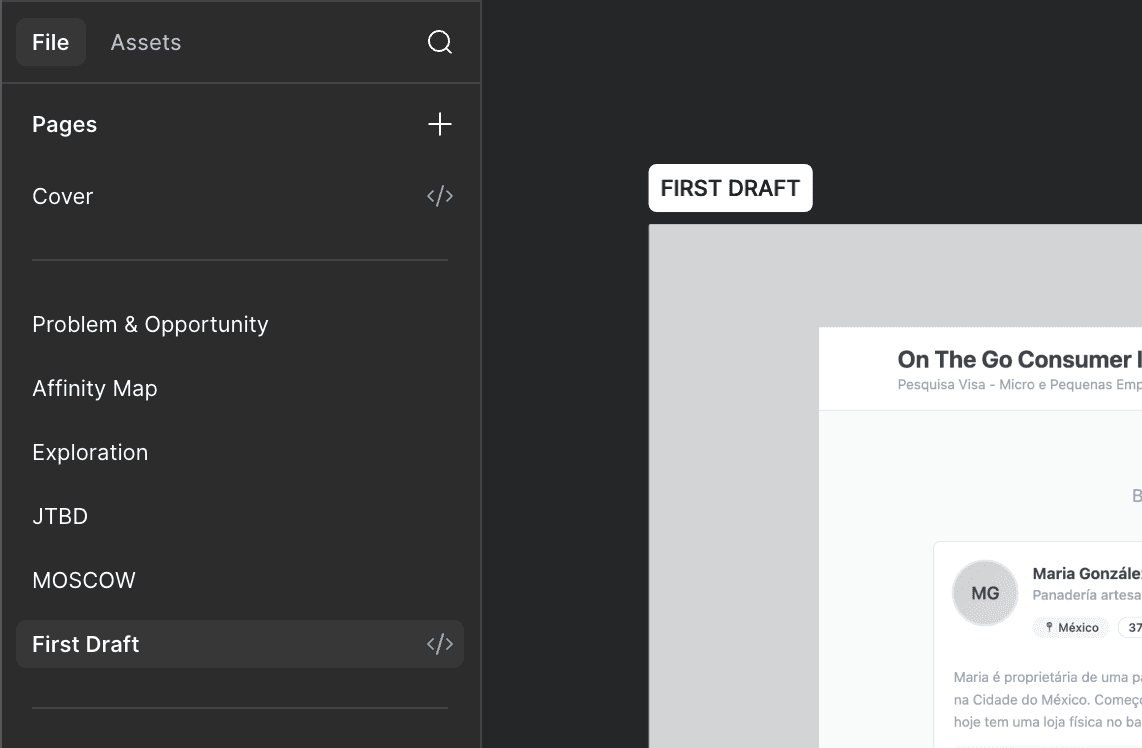
The process started from research synthesis mapping how teams currently used personas, identifying where value was lost, and understanding what stakeholders actually needed from audience data.
Solution
A research interface where stakeholders can talk to segments
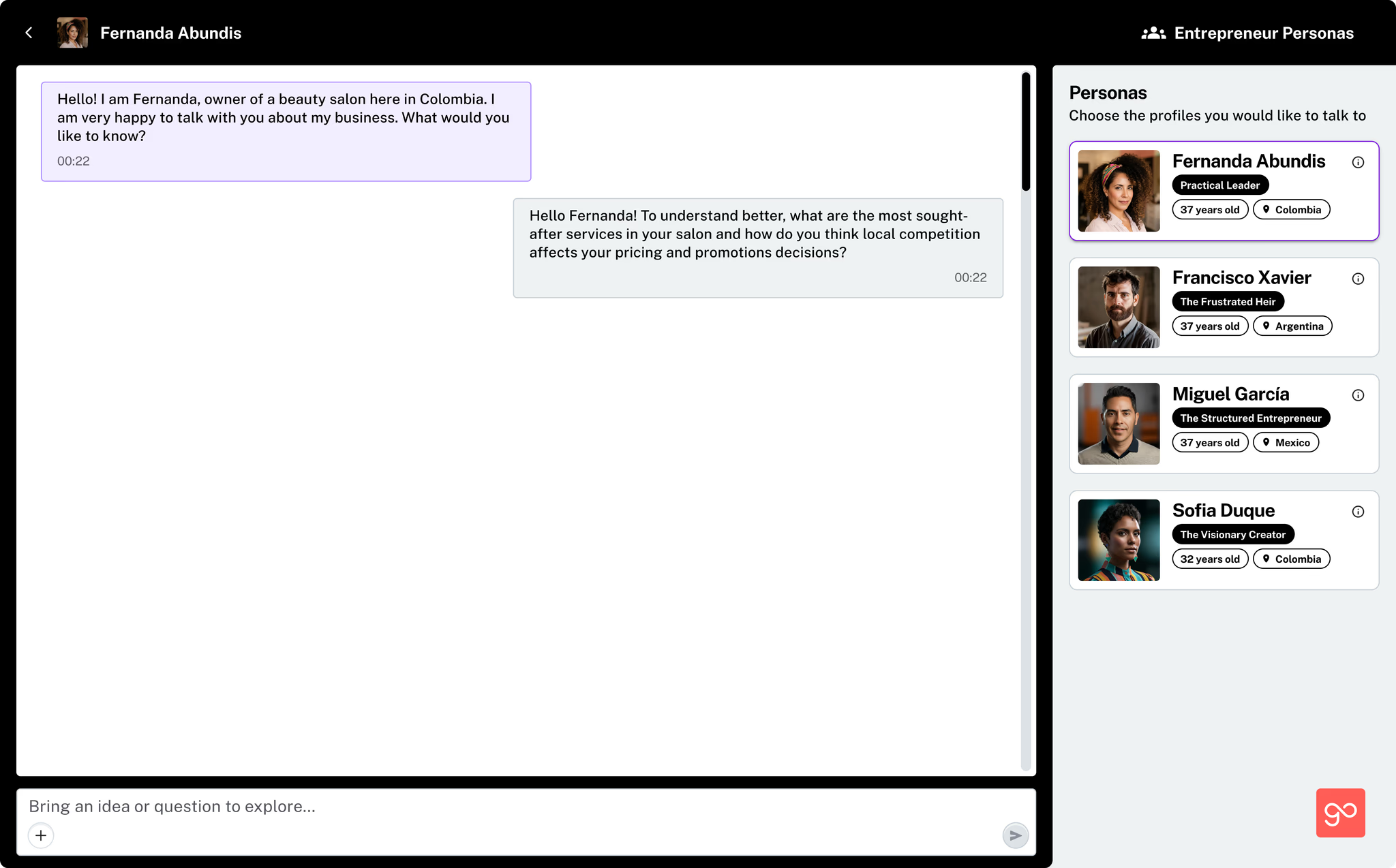
The final product followed a single-page layout: understand the persona, ask a question, read the response, and explore further. Each persona could be queried in natural language, and answers were drawn from real research data.
Solution 1
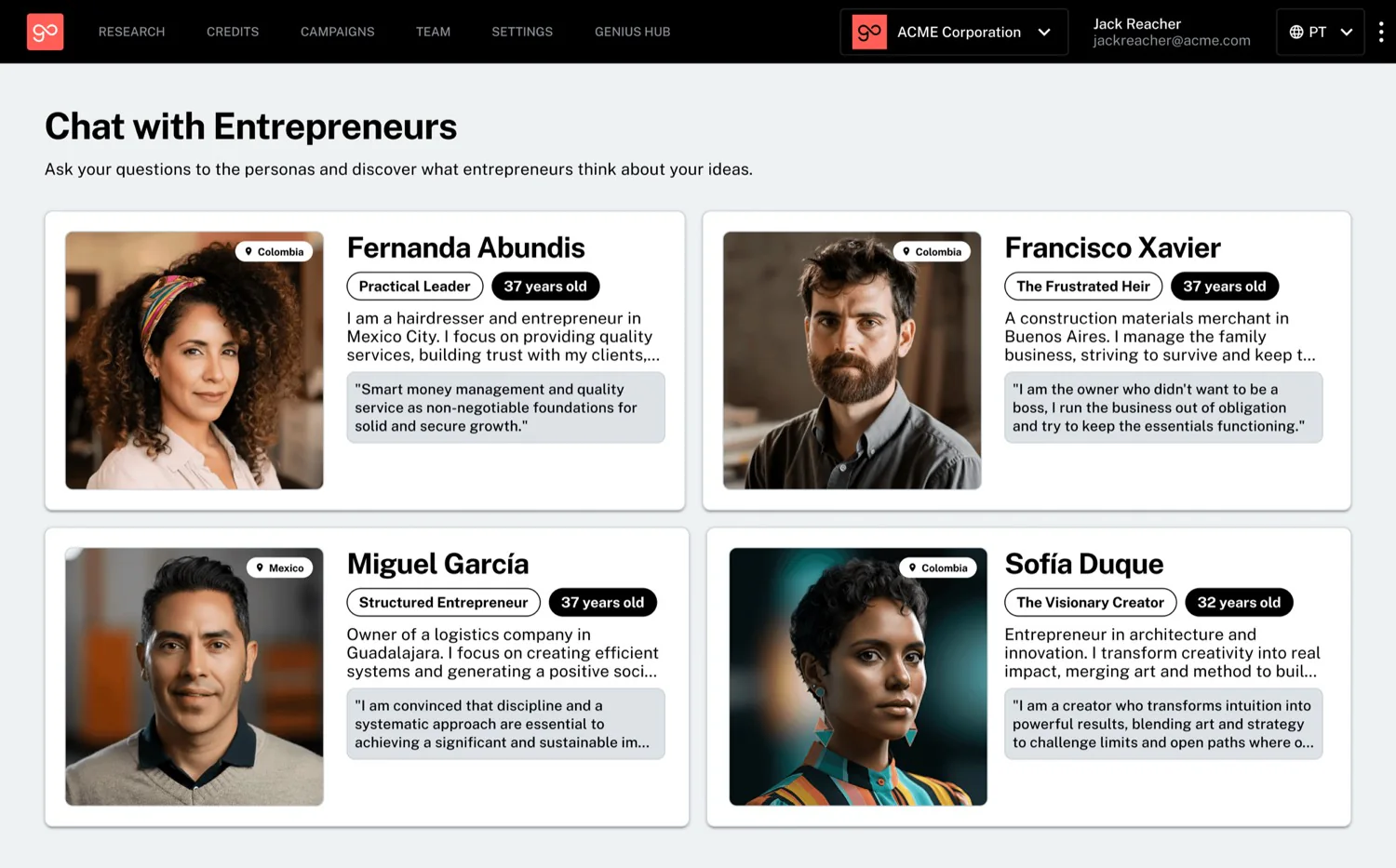
Every segment, ready to explore
The main interface brings together every available persona as scannable cards showing key attributes like segment, market, and behavioral profile. Each one ready to talk.
Solution 2
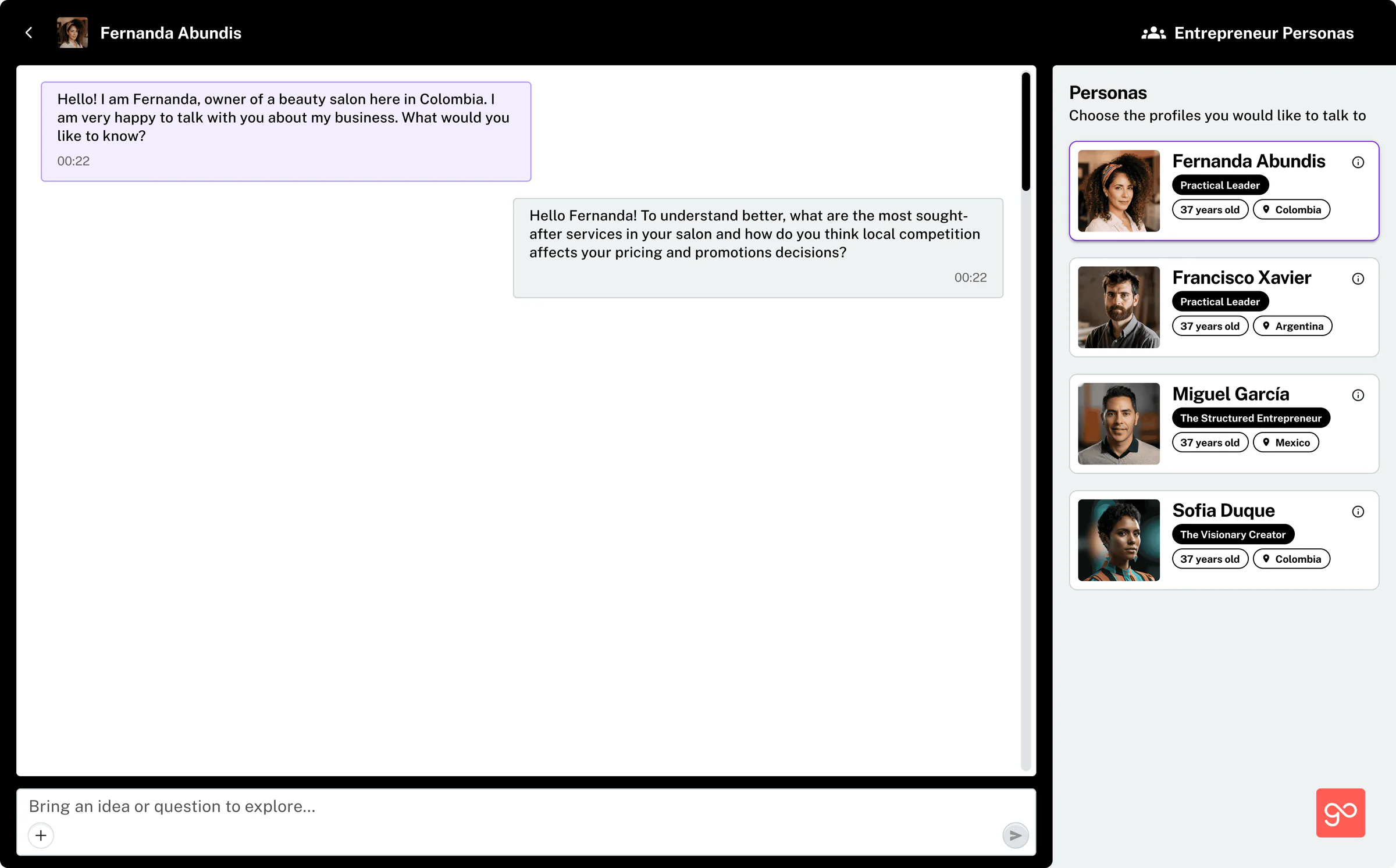
Talk to your audience. They’ll talk back.
Once a persona is selected, stakeholders can ask questions in plain language and get responses grounded in segmentation data, qualitative interviews, and real behavioral patterns.
Solution 3
Pick the right persona always
The selection screen shows each persona’s market, profile type, and core behavioral traits upfront, making it easier to choose the right one and compare across segments without extra effort.
Results
Making consumer understanding more accessible and actionable
The Personas Initiative replaced passive audience documents with an interactive research layer. Stakeholders could now ask questions directly to personas, reducing the distance between research data and strategic decisions.
3
Latin American markets compared in one interface
Argentina, Colombia and Mexico side by side, each with its own behavioral profile: cross-market comparison became natural, not a research exercise in itself.
2
modes on one screen: quick summary and live conversation
Each persona works both as a summary for quick reference and as a live conversation partner, in the same interface and without added cognitive overhead.
1
single-page flow: understand, ask, read, explore
Understand the persona, ask a question, read the response and explore further, all on one page, with answers drawn from real research data.
Other cases
All cases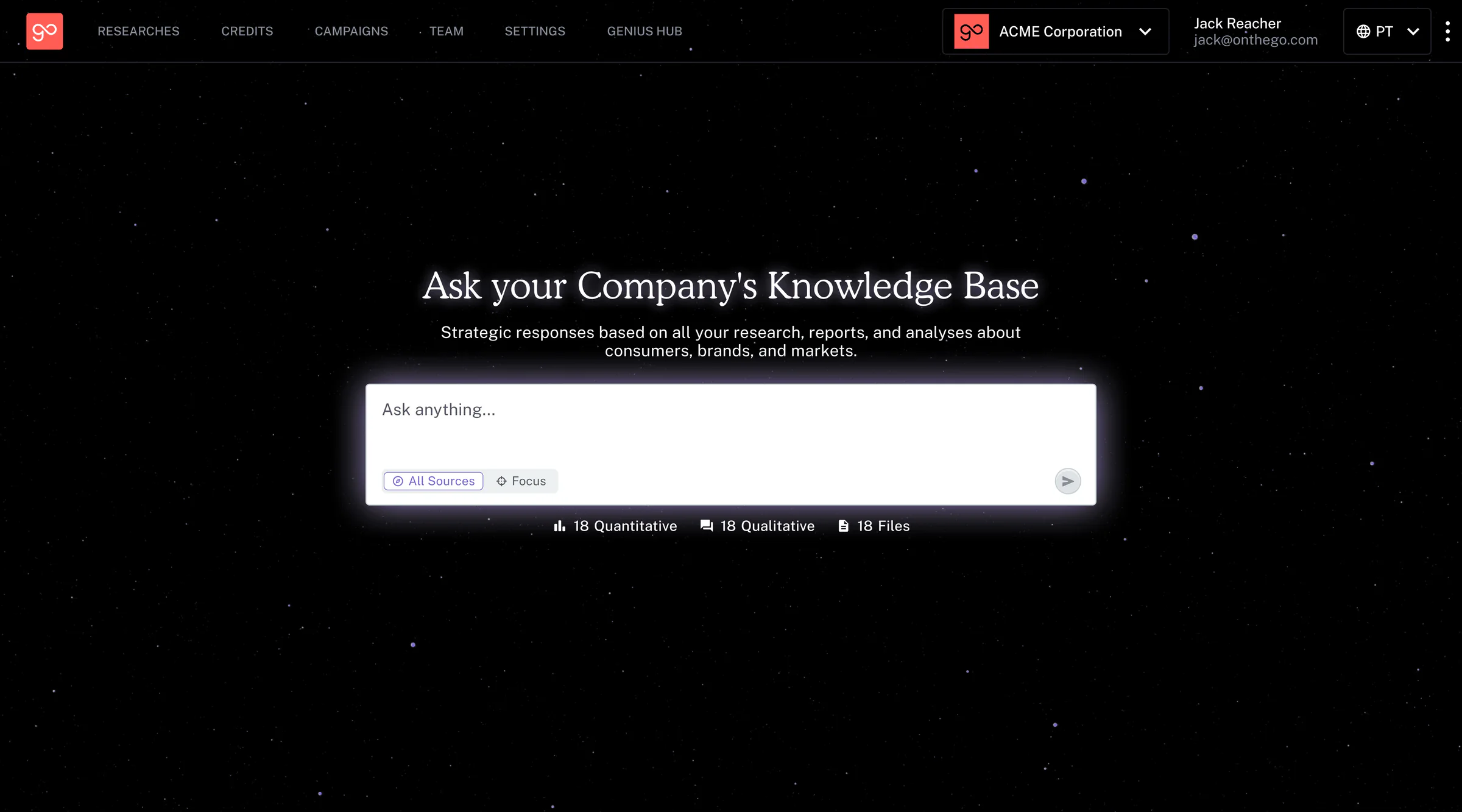
Building a connected system for research knowledge
A centralized intelligence layer that connects every study and insight into one conversational source of truth.
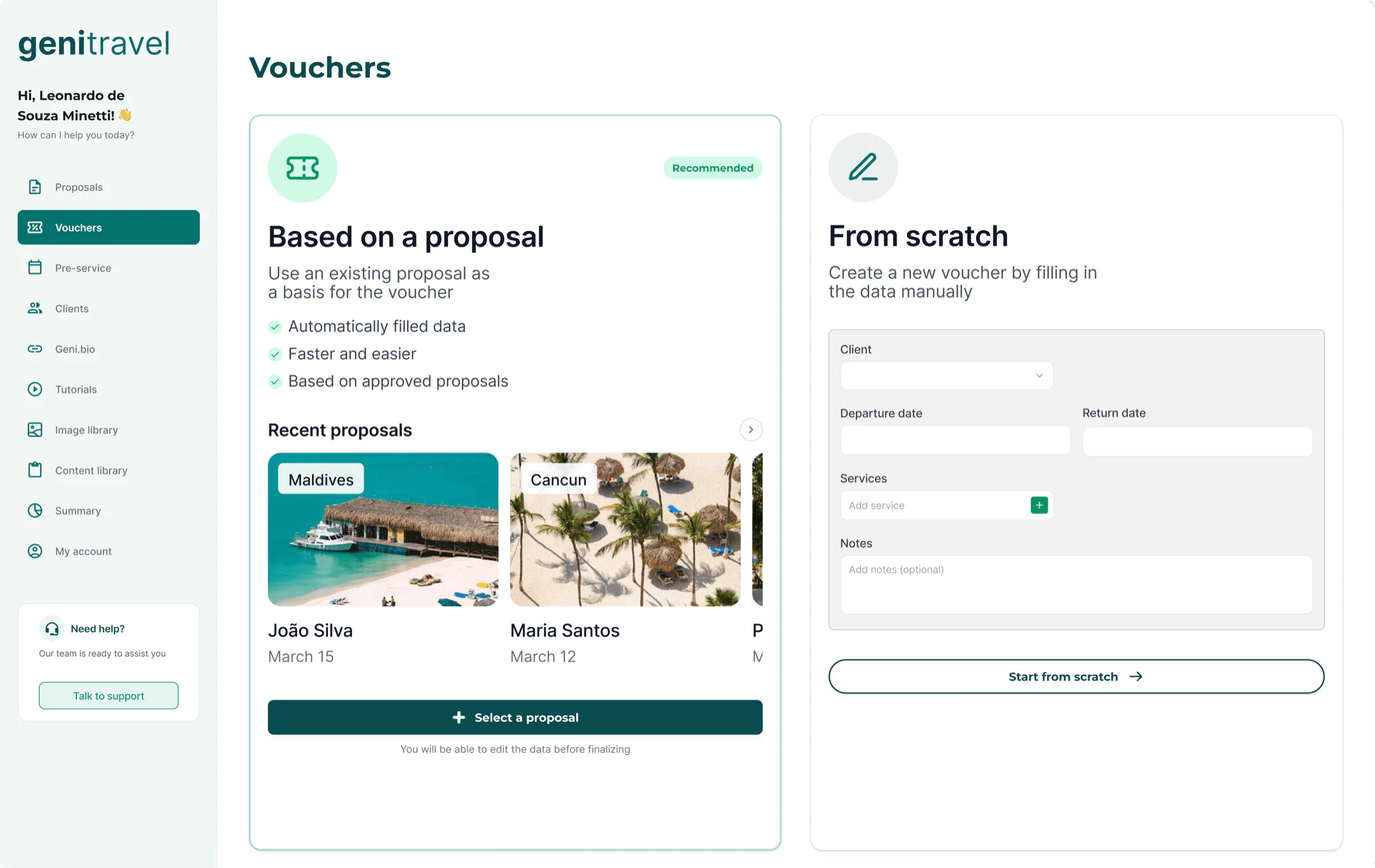
Turning proposal workarounds into a voucher workflow
A dedicated voucher workflow that helps travel agents create, track and deliver trip information with clarity.